
More Biosecurity Bites - Alternaria Leaf Blotch - Alternaria Mali
Alternaria is commonly seen on wounds in orchards and prevails in wet, warm conditions. Leaf damage from mites and strong winds can spread infections, seasonal carryover tends to occur on overwintering leaves, bark and twigs. Australia has specific Alternaria species and treatment responses, so caution should be taken when reading overseas literature. The life cycle for Alternaria is not well understood, response to treatment can also vary by state.
Damage
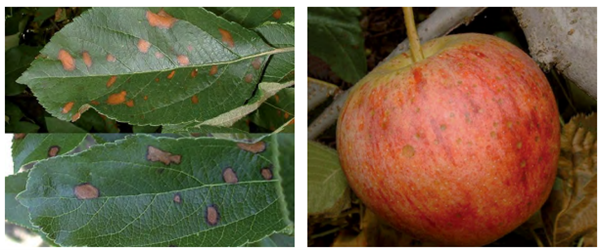
Lesions appear on leaves often well into summer, small roundish purple or black spots. Summer rainfall leads to a rise in population and spots become light brown with purple border and irregular shape. Spots grow and form necrotic areas and can defoliate trees with serious infection. Leaf infection does not always lead to fruit infection, high levels of leaf infection being washed onto fruit can lead to fruit infection, sometimes fruit spots show after a period of cold storage following harvest.
Fruit symptoms can vary, small sunken brown spots appear on lenticels soon after rainfall. Spots tend not to appear during storage but once removed from cool room existing spots will grow in size and provide secondary rot opportunities.
Treatment
Prevent infection by mulching prunings or removing from the orchard before leaves emerge in spring. Ground and foliar applications of urea after harvest and leaf fall will reduce inoculum in the same way as managing scab. The most effective treatment is removing inoculum over winter.
The disease can infect leaves shortly after bloom and lay dormant until suitable weather conditions. Treatment after symptoms are visible are less effective than mid-spring/November treatments. Several days of warm wet weather in summer can lead to large inoculum outbreaks.
Susceptible varieties include Gala, Pink Lady and Fuji, close plantings and dense canopies assist in spreading the fungus. Mite damage and tree stress can cause rapid disease development.
Winter
Spores live on dead apple leaves on orchard floor, twigs and buds in trees. Spores are dormant in cold weather. Control by mulching leaves to lower inoculum levels. If high levels were seen last season, be especially mindful to defoliate trees, mulch fallen leaves and remove pruned branches.
Spring
Spores are blown or splashed onto young leaves, actively infecting trees, this is the best time to apply fungicide to protect leaves. Preventative fungicide applications from petal fall will provide the greatest benefit, before any lesions are visible.
Begin inspecting leaves from October for small, purple lesions. Scout for leaf spots in the tops of trees in late spring as this can spread inoculum throughout canopy in warm, wet conditions. Use late season fungicides to support early spring campaign as withholding periods can be up to 2-4 weeks.
Summer
New season spores emerging on leaves and spreading throughout tree. Favour warm and wet conditions. Fungicide application can protect leaves and fruit but heavy infections at this point will be difficult to combat.
Autumn
Infected leaves defoliate to orchard floor. Post harvest fungicides can reduce carry-over inoculum.
Pay attention to withholding periods when applying late in the season and be sure to rotate modes of action to prevent resistance.
More information can be found at:
Orchard plant protection guide for deciduous fruit in NSW 2025–26 p. 97.
Alternaria - Australian Apple and Pear IPDM | Australian Apple and Pear IPDM