
Polyphagous Shot Hole Borer workshops strengthen national response strategy
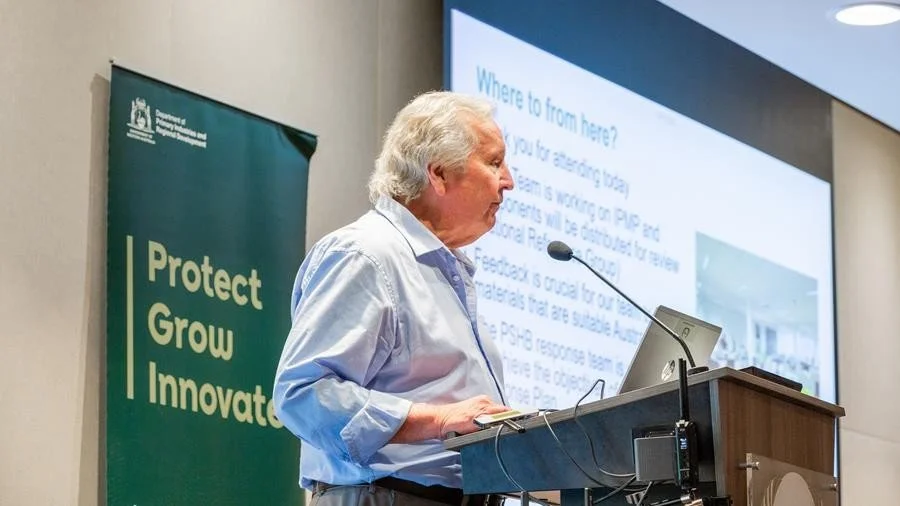
PSHB CCEPP workshop and field trip
On 17 and 18 March 2026, Western Australia hosted a high-level PSHB workshop and an educational field trip for the Consultative Committee on Emergency Plant Pests (CCEPP). These sessions allowed national biosecurity partners to observe the Perth infestation first-hand, learn valuable knowledge from the WA experience, and align on technical requirements for the Transition to Management (T2M) phase.
PSHB National Stakeholder Workshop – 19 March
The PSHB National Stakeholder Workshop, held on 19 March at The University of Western Australia (UWA), brought together industry representatives, state and local government representatives, natural resource management representatives, academics and local and international PSHB experts. Participants learned from the WA experience and engaged in discussions outlining progress on the Transition to Management (T2M) plan, including the Capacity Building and Training and Slow the Spread programs. Participants also learned from international experts, gaining invaluable insights drawn from the experiences of California and South Africa.
Chief Plant Biosecurity Officer Dr Vincent Lanoiselet opened the workshop by outlining the strategic pivot from eradication to transition to management. This phase focuses on containing the pest to the Perth metropolitan area to protect the state’s $3.56 billion horticulture industry and regional forests. The workshop featured world-leading experts, including Prof. Shannon Lynch from California, Prof. Francois Roets and Prof. Brett Hurley from South Africa, who shared global information and data on host susceptibility and management strategies. Further details on these presentations are provided in the articles below.
Our next edition will feature additional articles on other key presentations from the workshop.
Watch the full video of the PSHB Stakeholder Workshop here.
A successful national collaboration
The high level of engagement throughout the week reflects the shared commitment to protecting Australia’s biosecurity. The workshops were a significant success, providing a vital platform for aligning national management strategies and sharing technical local and international knowledge and expertise. I would like to extend a sincere thank you to everyone who attended in person at UWA, as well as the almost 300 participants who joined us online for the 19 March PSHB National Stakeholder Workshop event. Your collaboration is essential as we move forward together in the T2M phase.
Steve Nel
PSHB Incident Controller
All Sources and Photos: Jessica Palmer, DPIRD at the PSHB National Stakeholder Workshop on 19 March.]
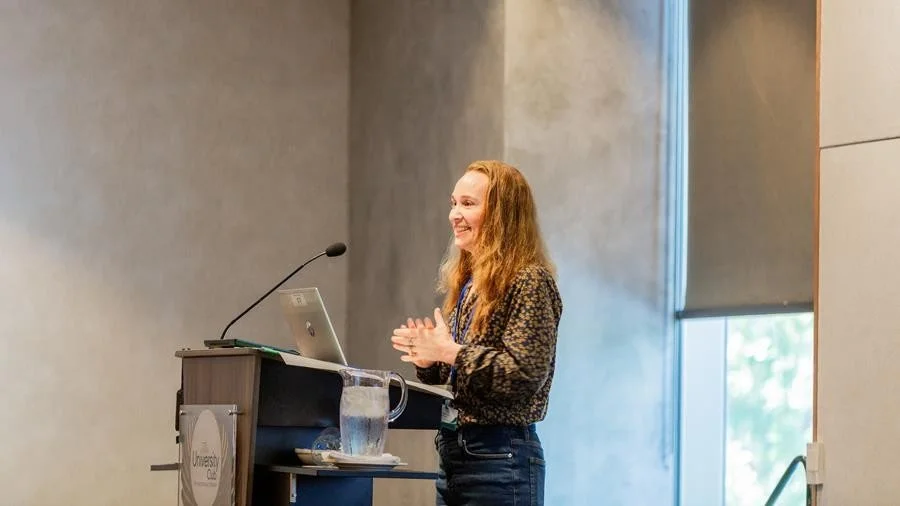
Professor Shannon Lynch: shot-hole borer outbreak in California
Professor Shannon Lynch from the University of California, Davis delivered a compelling presentation on the biology, spread and impacts of invasive shot-hole borers (ISHB) i.e., polyphagous shot hole borer and kuroshio shot hole borer in California. She outlined the Californian Integrated Pest Management framework developed from lessons learned and demonstrated its implementation through a Disneyland case study. These insights will help inform our ongoing T2M efforts here in WA and across Australia.
Topics covered
· Introduction to pest-pathogen system in California
· Research framework and statewide initiative
· Management options in California
· Management Lessons: Case Study in Disneyland.
Disneyland case study highlights
Background
The resort occupies approximately 600 acres and consists of theme parks, hotels, shops and parking lots. There are approximately 16,000 trees and 681 species/varieties.
As a response to PSHB infestation, Disneyland injected over 600 non-infested trees with systematic pesticides. Unfortunately, these injections caused unintentional damage to otherwise healthy trees.
Response
A team from the University of California Davis carried out a ground survey to identify hot spots, the crew monitored inventoried trees to determine the source of beetle populations on infested trees and to determine which management actions to apply based on attack severity and host type.
An Integrated Pest Management Plan was implemented.
Conclusion
The study shows coordinated monitoring and targeted management can reduce beetle populations and protect high-value trees.
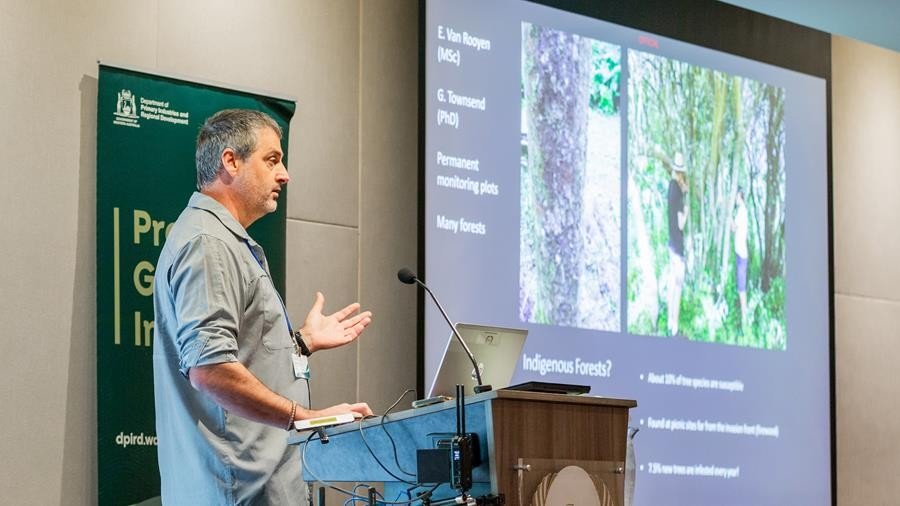
Professor Francois Roets: the PSHB invasion in South Africa: can it be stopped
Professor Francois Roets from Stellenbosch University presented a detailed report on the spread, impacts, monitoring, and recommended strategies for mitigating the impacts of PSHB in South Africa.
Drawing on years of observational data from the South African outbreak, Professor Roets outlined how the beetle has rapidly transitioned from botanical gardens to urban forests and commercial agricultural sectors. His presentation emphasised that while eradication is not feasible in areas where the pest has established, strategic containment is possible through intensive mapping and monitoring and the removal of 'amplifier' trees - highly susceptible species that host massive beetle populations.
Key insights from the South African experience include: Host vulnerability: The identification of specific native and exotic species that act as primary drivers for regional spread.
Management realities: The necessity of community-led reporting and professional wood-disposal protocols to prevent 'hitchhiking' via unseasoned firewood.
Research synergy: Ongoing collaboration with international partners to test biological control agents and chemical treatments.
Professor Roets concluded that while the invasion presents a generational challenge, the most effective defence for protecting high-value assets and regional biodiversity is a robust monitoring program, similar to the Sentinel Tree Network program currently being used by DPIRD in WA, and a comprehensive and adaptive management plan involving stakeholders at all levels
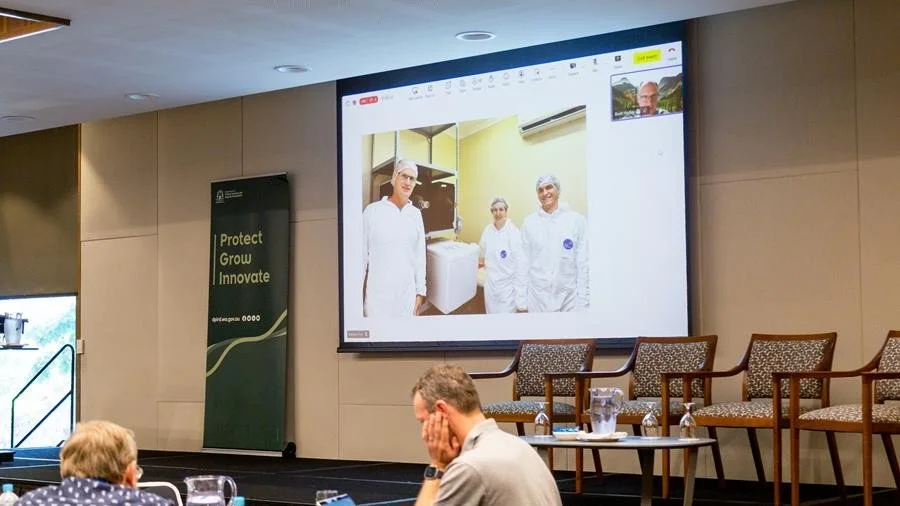
Professor Brett Hurley: biological control of invasive forest pests
Professor Brett Hurley from the Forestry and Agricultural Biotechnology Institute (FABI) at the University of Pretoria, South Africa delivered a comprehensive presentation on the potential for managing PSHB through biological control.
The role of natural enemies
Professor Hurley outlined how natural enemies - including parasitoids, predators, nematodes, and entomopathogens - play a vital role in regulating pest populations in their native ranges. His research explores how these organisms can be utilized in a "classical biological control" strategy, where specific natural enemies from the pest's home range are introduced to manage infestations elsewhere.
Global surveys and research
The presentation detailed extensive field surveys and international collaborations aimed at identifying the most effective control agents:
South African surveys: Research was conducted across the native forests of the Western Cape and KwaZulu-Natal to study both native and introduced bark and ambrosia beetles and their associated parasitoids.
Vietnamese insights: Vietnam, as part of the beetle's native range, provides a high-priority landscape for discovering specialised parasitoid wasps that target PSHB larvae within their galleries.
The path forward
The presentation concluded that while classical biological control remains a highly viable long-term option for reducing beetle population pressure, significant exploration and host-specificity testing are still required. This work is essential to ensure that any introduced natural enemy effectively targets PSHB without impacting local species or biodiversity.