
PSHB: Critical information for growers this season
PSHB: Critical Information for Growers This Season
An update on detection, risks and best‑practice management
During the warmer temperature Polyphagous Shot‑Hole Borer (PSHB) activity increases. PSHB dispersal peaks January to March, making this the most important time of the year for surveillance and early intervention. This article brings together the latest information growers need from recent workshops and field guidance to help protect orchard productivity and prevent further spread.
What Is PSHB and Why It Matters
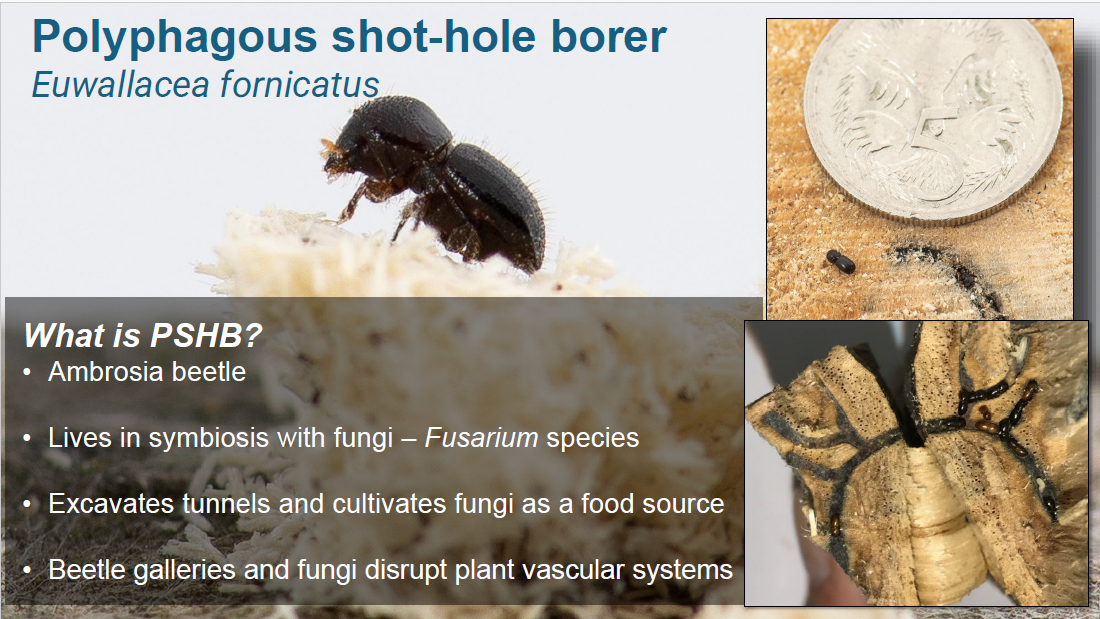
PSHB (Euwallacea fornicatus) is a tiny ambrosia beetle that bores into live and dead wood, creating galleries where it cultivates a Fusarium fungus its food source. The fungus blocks the tree’s xylem, reducing water and nutrient transport, leading to dieback, limb failure, loss of productivity, and potentially tree death. PSHB has a rapid reproductive cycle, short development time (30–40 days), and strongly female‑biased populations. A single female beetle can found a new colony, meaning one missed infestation can lead to repeated reinfestation across a block.
Which Orchard Crops Are at Risk?
The global host list for PSHB includes 500+ plant species, and many commercial fruit crops are known hosts. Reproductive orchard hosts (highest concern for spread). These allow the beetle to complete breeding cycles and build population pressure.
Avocado
Apple
Mulberry
Fig
Pear (varies by species)
Stone fruit
Non‑reproductive hosts (still vulnerable)
Citrus (lemon, lime, grapefruit)
Carob
Grapevine
Where PSHB Thrives
Growers should prioritise surveillance in environments known to support PSHB:
Humid, shaded areas
Highly irrigated zones
Dense orchards with poor airflow
Freshwater systems, dam edges, drains, stormwater areas
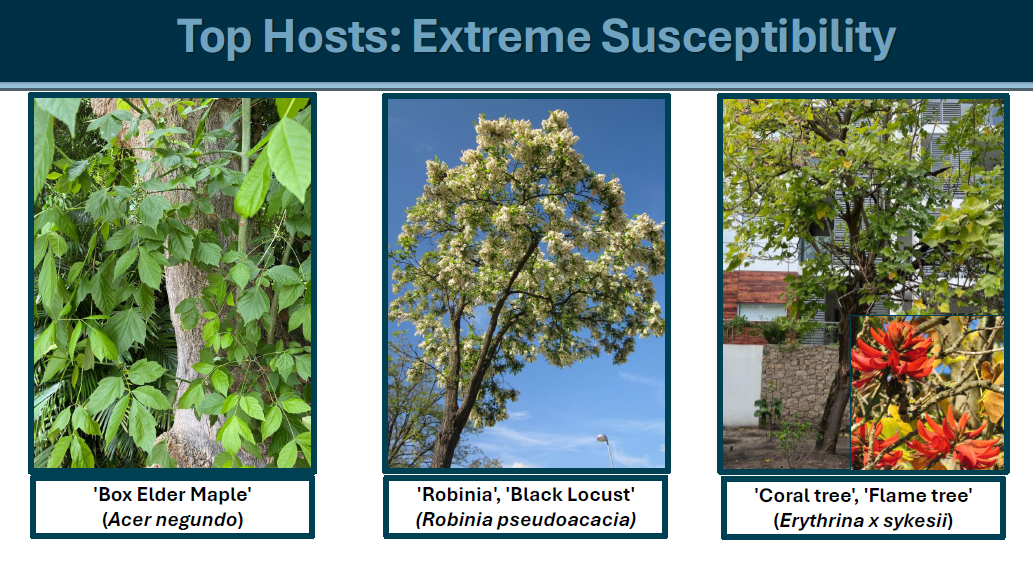
Proximity within 150m to extremely susceptible hosts
Reproductive extreme risk hosts (ornamental)
Robinia
Box elder maple
Coral or flame tree
PSHB is consistently found in humid, shaded and high‑density host environments. These conditions are common in modern orchard production, increasing both susceptibility and the risk of undetected spread. During the DPIRD eradication response, 90% of orchard trees found to be infected were within 150m of an extremely susceptible host as listed above. Consider any ornamental or windbreak varieties carefully.
How to Detect PSHB in Orchards
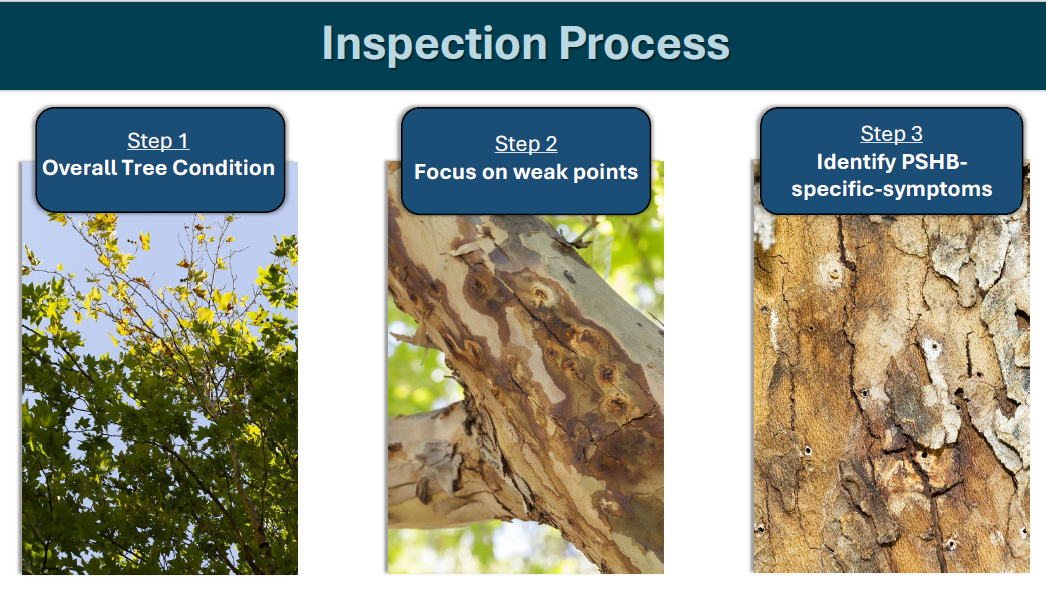
Detection requires systematic scanning, starting from whole‑tree observations down to close‑up inspection.
1. Whole‑Tree Scan
Look for:
Canopy thinning or leaf discolouration
Dead or declining limbs (Fusarium dieback)
Fallen branches
Evidence of storm or mechanical damage
2. Check Vulnerable Entry Points
Beetles preferentially target:
Branch collars
Natural cracks or fissures
Fresh splits, storm damage, snapped limbs
Pruning wounds, mower or machinery damage
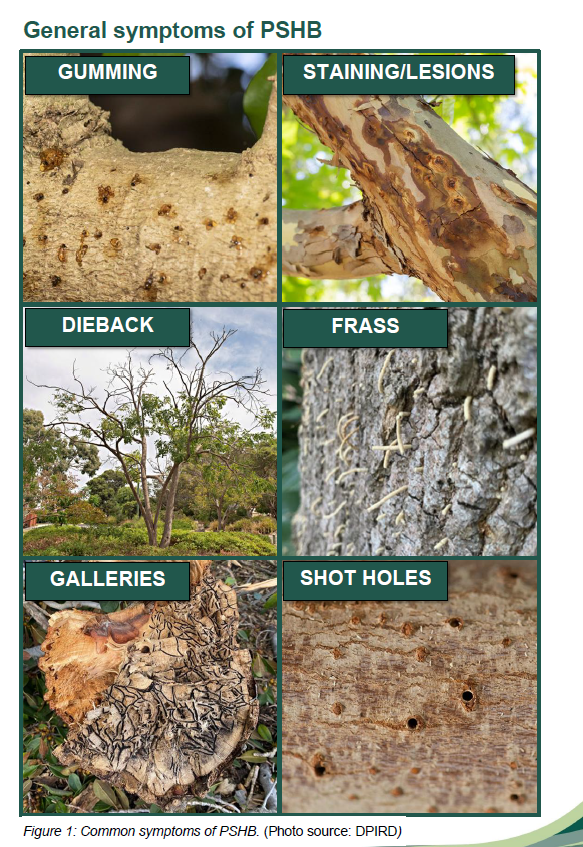
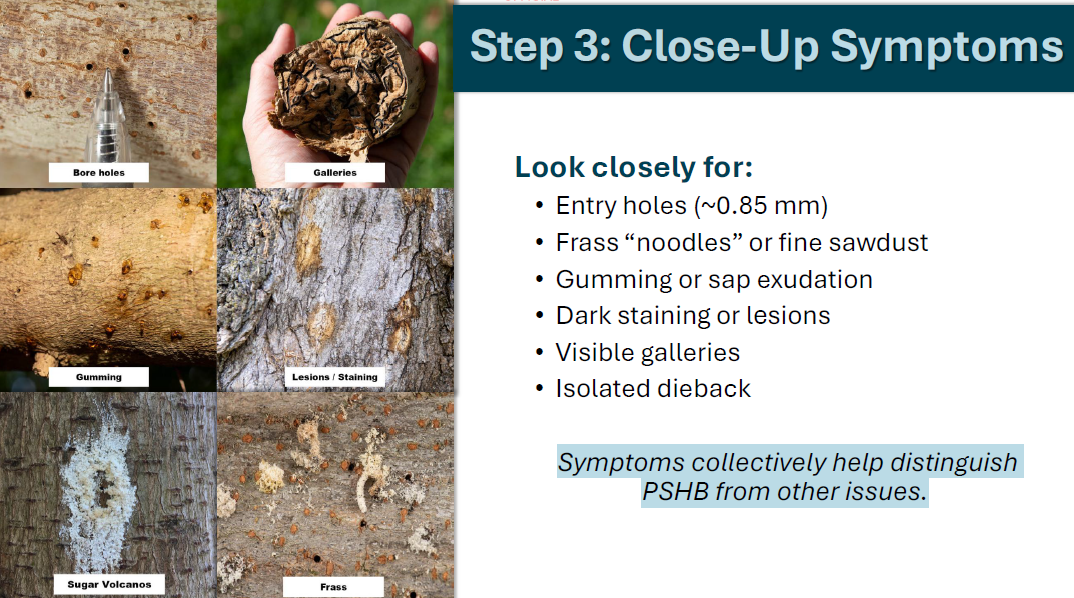
3. Close‑Up Symptoms
These are the most reliable indicators:
Entry holes ≈ 0.85–1 mm
“Frass noodles” or fine sawdust
Dark staining or lesions around entry points
Gumming or sap exudation
Sugar volcanoes (particularly on avocado)
Heavy rain and wind can obscure symptoms such as frass and staining, making multiple symptom types valuable when confirming suspicion.
Storms Create Inspection Opportunities
Storm‑damaged branches frequently expose:
Blackened fungal galleries
Frass accumulations
Staining
Storm events should trigger immediate post‑storm orchard surveillance.
High‑Risk Seasonal Window
PSHB trap capture data and temperature correlations show major dispersal events in warmer months, particularly January through to March. This is the period when new infestations are most likely to appear. Growers should increase inspection frequency during this window.
Preventing Spread: What Growers Must Avoid
The highest risk pathway for PSHB spread is movement of infested plant material, especially:
Unseasoned wood
Green waste
Mulch >2.5 cm
Firewood
Transporting waste off‑site can move beetles into new areas.
Correct Disposal
DPIRD recommends:
Chipping to <2.5 cm on site, don’t chip in mid-summer
Burying waste deeper than 30 cm and compacting
These methods prevent beetles from surviving in discarded material.
Grower Actions for Surveillance and Risk Reduction
Increase Surveillance:
Prioritise high‑risk hosts and humid zones
Schedule inspections around pruning and after storms
Monitor trees with signs of nutrient stress, pathogens, or bark damage
Manage Tree Health
Stressed trees are more vulnerable. Improve:
Water management
Soil aeration
Nutrient balance
Control of pathogens and trunk damage
Minimise Entry Points
Prune cleanly in dry weather
Disinfect tools (70% ethanol recommended)
Avoid unnecessary bark damage
Implement Waste Hygiene
Keep all green waste on the property where feasible
Follow QA movement restrictions
Ensure contractors understand the rules
What to Do if You Suspect PSHB
Identification of the beetle itself is difficult only molecular testing can confirm a specimen.
Growers should report symptoms, not beetles, using:
MyPestGuide Reporter app
DPIRD PaDIS hotline
If you find multiple symptoms, photograph the area and report immediately.
Staying Informed
The WA Agricultural Research Collaboration (WAARC) is investing in research to support growers in detection tools, modelling, lure development and host susceptibility studies.
For updates, visit dpird.wa.gov.au/pshb.