
Field day spreads Narrow Orchard Systems research learnings far and wide
Local and national research advancing Narrow Orchard Systems production in Australia to help boost horticulture businesses’ margins and resilience was showcased at a recent South West field day.
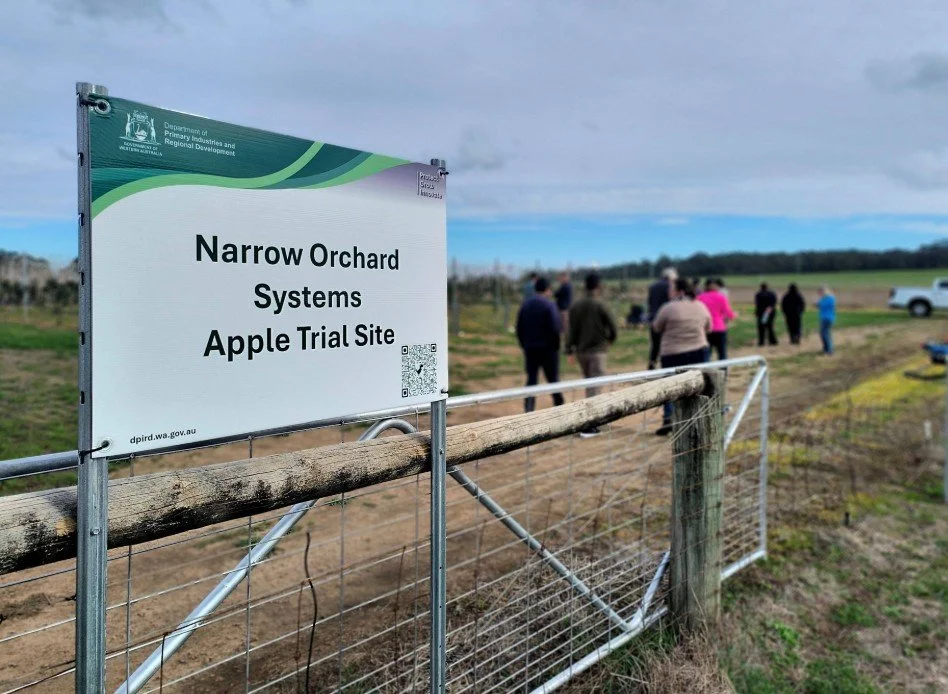
The latest advances on the Narrow Orchard Systems project were discussed at a recent DPIRD field day at the Manjimup Horticulture Research Institute.
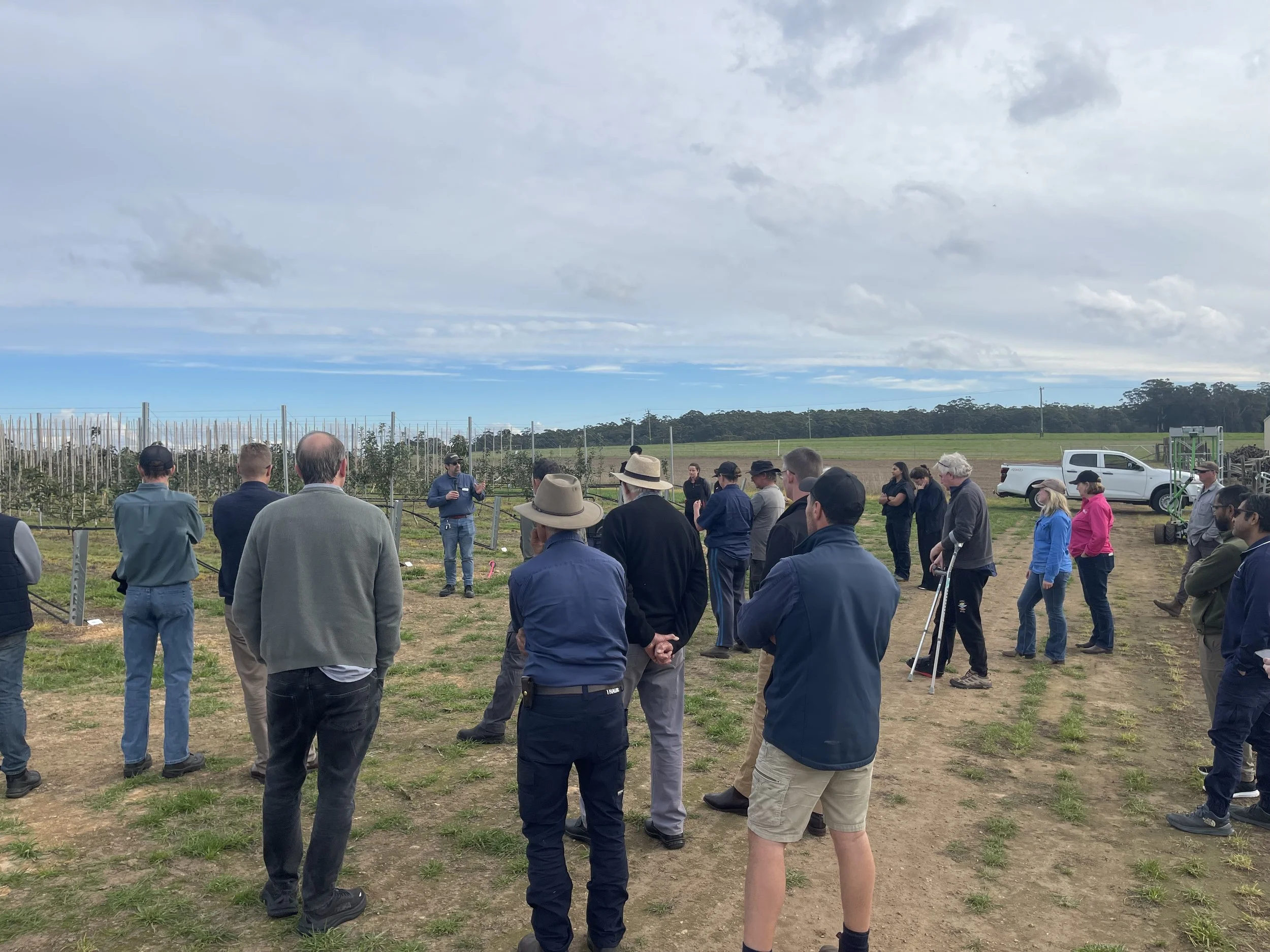
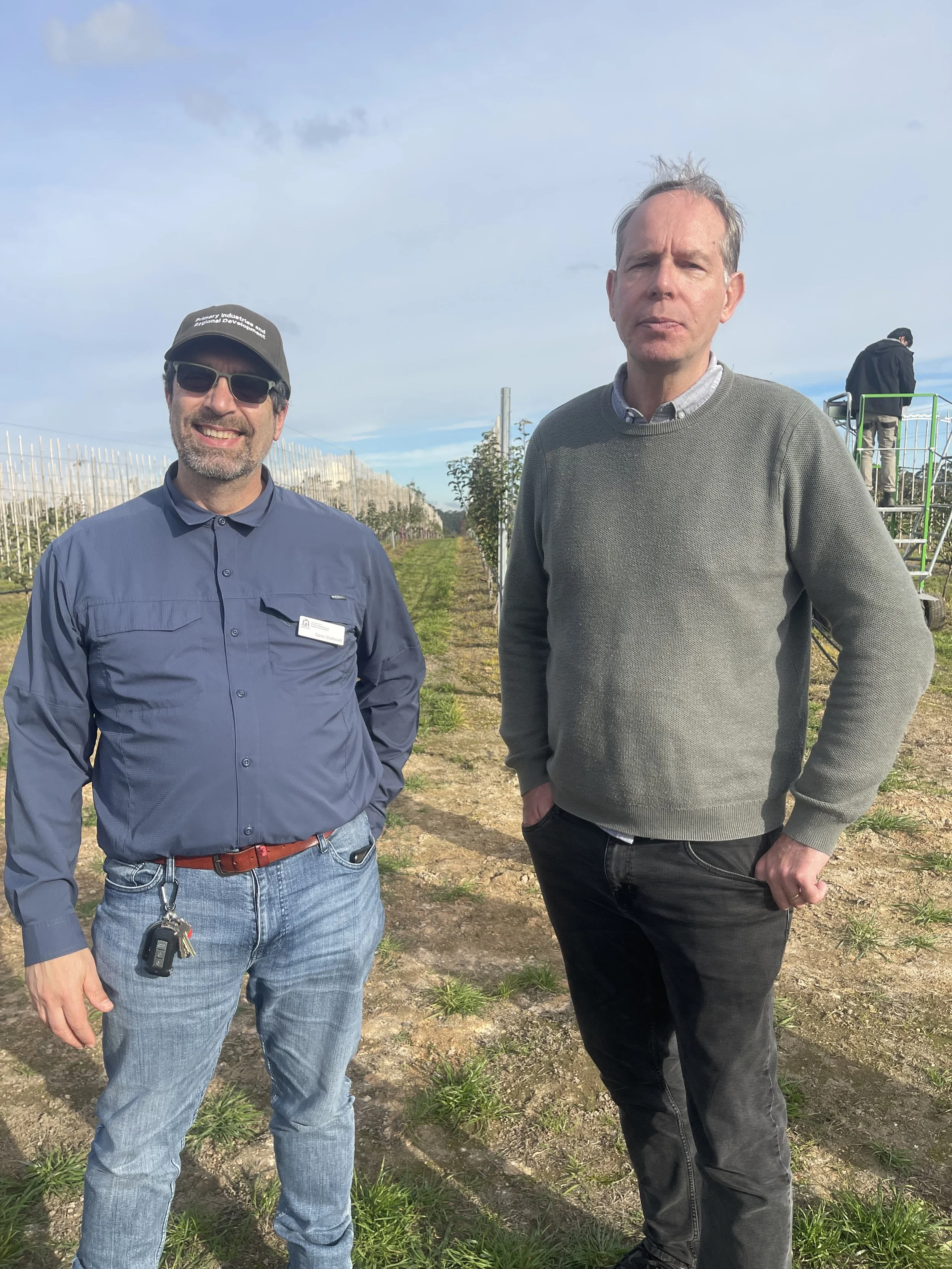
Local and national research advancing Narrow Orchard Systems production in Australia to help boost horticulture businesses’ margins and resilience was showcased at a recent South West field day. More than 30 growers attended the Department of Primary Industries and Regional Development’s (DPIRD’s) ‘Apples for the Future’ field day at its Manjimup Horticulture Research Institute.
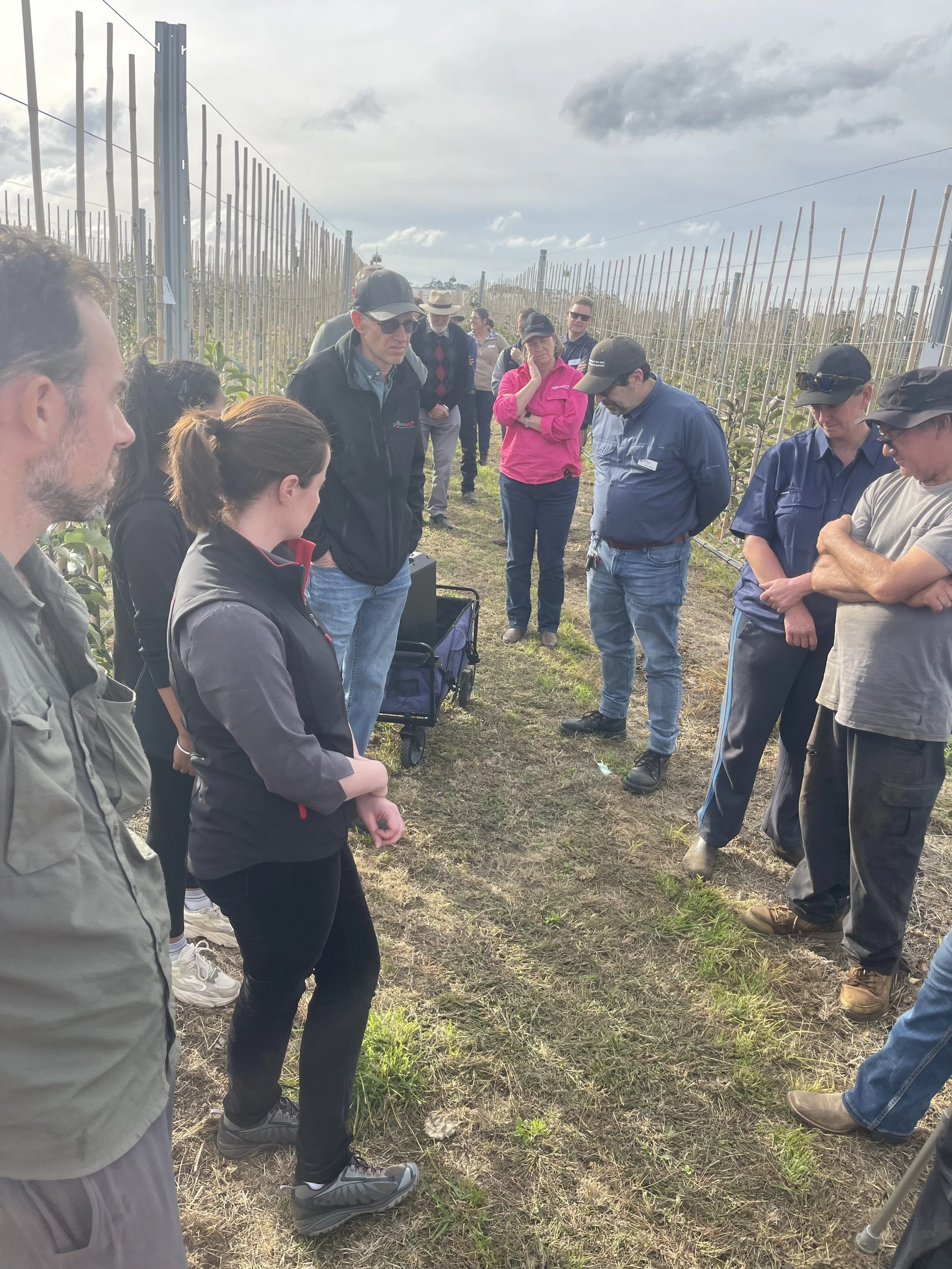
The group toured the Narrow Orchard Systems research and demonstration site and received an update on DPIRD’s contribution to Hort Innovation’s Narrow Orchard Systems for Future Climates project.
The five year project aims to refine multi-leader 2D tree canopy design to deliver more consistent, high quality fruit, alongside orchard efficiencies to help build more sustainable and resilient operations.
Three apple cultivars grown on three different rootstocks are being trained into a vertical 2D ‘fruiting wall’ to improve light, airflow and plant growth and create a uniform, productive canopy that is easier to manage and harvest. Researchers are tracking and comparing the growth of the trees through the growing season to develop and fine tune canopy management and fruiting strategies.
DPIRD research scientist Asad Ullah said the project had already revealed some promising results.
“In year one the trees were trained into two horizontal branches, known as cordons, and now in year two the focus has shifted to building vertical growth from those branches,” Dr Asad said.
“One of the biggest factors influencing early tree growth has been rootstock, with the most vigorous semi-dwarfing rootstock producing strong vertical shoot growth across cultivars.
“While this could lead to early canopy fill and early production, there is also potential for higher maintenance requirements in following seasons.
“Data collection will continue through to the end of the second growing season.”
While DPIRD’s research is focused on apples, the outcomes will be able to be adapted to other crops, such as cherries, plums, apricots and selected tropical species.
An economic analysis of narrow orchard production systems was also discussed, which will examine establishment and operating costs, fruit yields and quality, as well as production and harvest efficiencies to help guide growers’ investment decisions.
Field day visitors also heard from Agriculture Victoria scientists about their narrow orchard system pome and stone fruit trials, as well as South Australian Research and Development Institute and Bioeconomy Science Institute (NZ) researchers who discussed apricot and cherry trials.
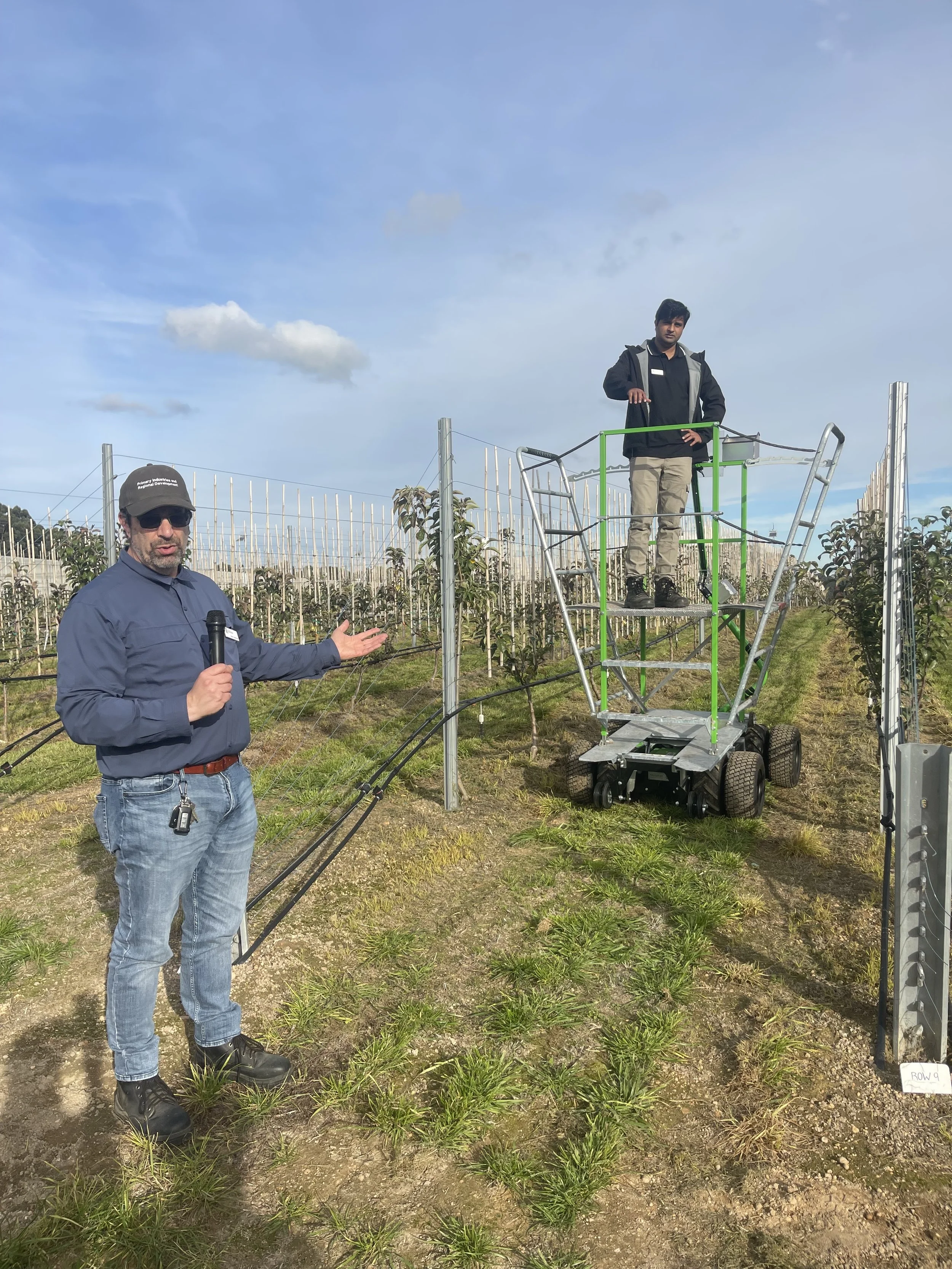
The day also featured an ag-tech demonstration, including an electric orchard management platform and orchard management sensors.
More information on DPIRD’s contribution to the project is available on the Narrow Orchard Systems webpage.
The ‘Narrow Orchard Systems for Future Climates’ project is funded by the Hort Frontiers Advanced Production Systems Fund, part of the Hort Frontiers strategic partnership initiative developed by Hort Innovation, with co-investment from Agriculture Victoria, NSW Department of Primary Industries and Regional Development, South Australian Research and Development Institute, Department of Primary Industries and Regional Development WA, University of Queensland and New Zealand Bioeconomy Science Institute, Pomewest, Tobias Industries and contributions from the Australian Government.
Video links below to other State’s Program Update presented at the Field Day